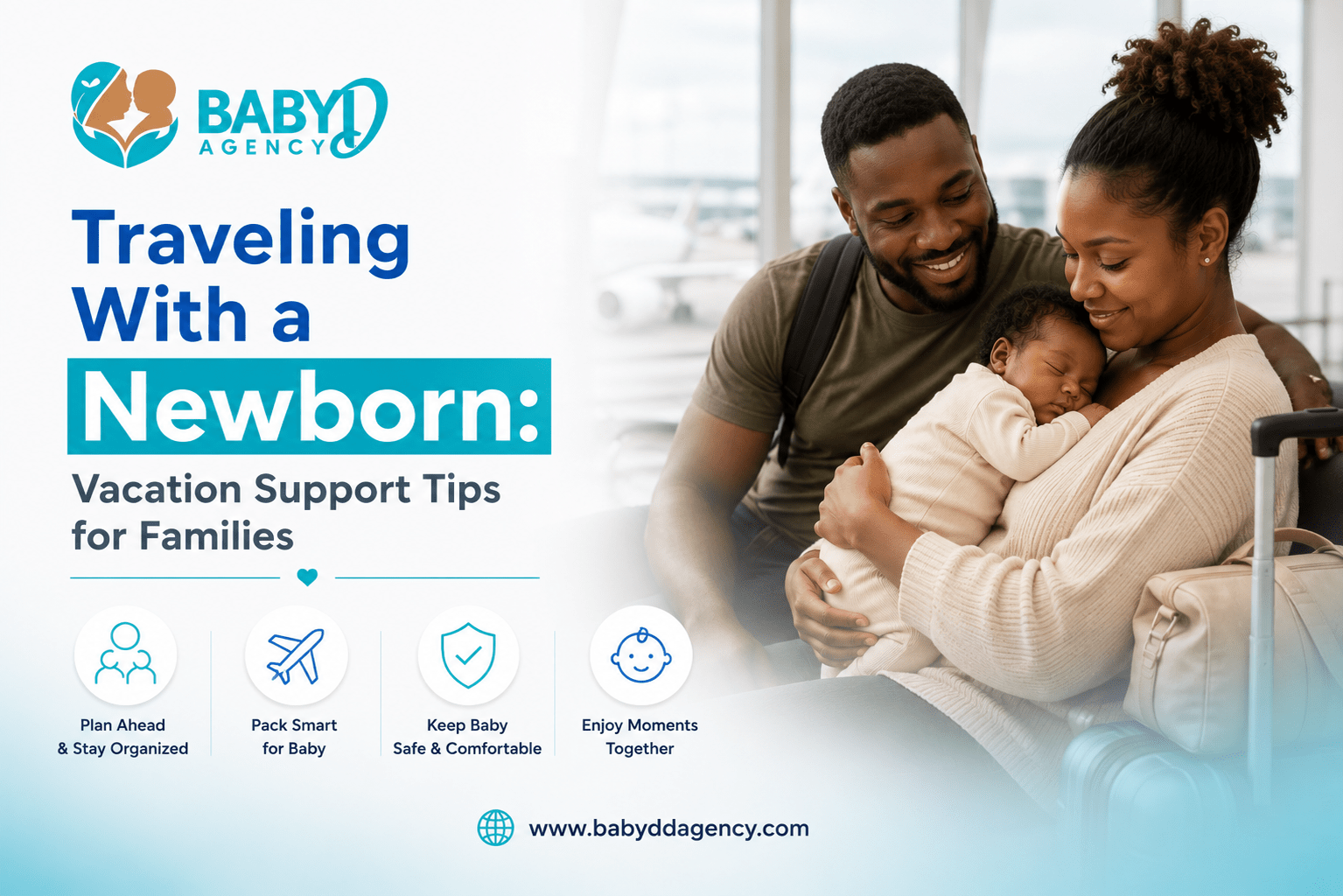
Traveling with a newborn can feel like a completely different challenge than any trip you’ve taken before. Between feeding schedules, unpredictable naps, and the sheer amount of gear a baby seems to require, even a short weekend away can feel overwhelming to plan. The good news is that with the right preparation, and the right vacation support, newborn care doesn’t have to stand in the way of family travel.
Whether you’re heading to see relatives, taking a babymoon-turned-family-trip, or just need a change of scenery during the fourth trimester, this guide walks through what to plan for, what to pack, and when it makes sense to bring in professional support.
- Why Traveling With a Newborn Requires a Different Kind of Planning
A newborn doesn’t operate on a vacation schedule. Feedings, diaper changes, and sleep windows happen on their own timeline, regardless of flight times or check-in windows. Traveling with a newborn means building your itinerary around your baby’s rhythm, not the other way around.
This is especially true in the first three months, when babies are still adjusting to life outside the womb and haven’t yet developed predictable routines. Add in a new environment, different noise levels, and disrupted naps, and it’s easy to see why even seasoned parents find newborn travel exhausting without support in place.
- Before You Go: A Vacation Support Newborn Care Checklist
Good preparation starts well before you leave the house. A few weeks out, it helps to:
- Confirm your pediatrician is reachable while traveling, or ask for a recommendation near your destination
- Review vaccination and travel guidelines for your baby’s age, especially for flying or crossing state or country lines
- Plan around nap and feeding windows rather than around convenient departure times
- Arrange vacation support newborn care in advance if you’ll need extra hands, whether that’s a family member, a Postpartum Transition Doula, or a certified Transition Specialist who travels with your family
Booking support ahead of time, rather than scrambling once you arrive, is one of the biggest stress-reducers for Families in Transition traveling with a newborn.
- Packing Essentials for Traveling With a Newborn
Overpacking is common, but a few categories matter more than others when traveling with a newborn:
Feeding supplies — bottles, formula or breast milk storage bags, a manual pump backup, and a cooler bag if you’re traveling by car.
Sleep setup — a portable bassinet or travel crib, a sleep sack, and a swaddle your baby is already used to. Familiar sleep cues matter more away from home, not less.
Health basics — a digital thermometer, infant pain reliever (with your pediatrician’s dosing guidance), and a small first-aid kit.
Comfort items — a pacifier, a lovey or muslin blanket that smells like home, and one or two familiar toys.
Documents — your baby’s ID or birth certificate, insurance card, and any required travel consent forms if only one parent is traveling.
Packing light on everything except the categories above tends to make the trip smoother, not harder.
- Feeding and Sleep Tips While Traveling With a Newborn
Feeding on the go is often the biggest adjustment. If you’re breastfeeding, a nursing cover or scarf can make public feeds easier, and scheduling flights or car breaks around feeding windows avoids a hungry, overtired baby in transit. If you’re bottle-feeding, pre-measuring formula into travel dispensers saves time at each stop.
Sleep is harder to control, but not impossible. Try to recreate your baby’s usual sleep environment as closely as possible: same swaddle, same white noise, same general bedtime routine, even if the room looks different. Newborns take cues from routine more than from location, so consistency in the small things goes a long way.
- Air Travel, Car Travel, and Vacation Support Newborn Care Considerations
By air: Most airlines allow infants under two on a lap for domestic flights, though a car seat in its own seat is safer if your budget allows. Feeding during takeoff and landing helps babies equalize ear pressure. Book an aisle seat near the bathroom if possible, and board early to settle in before the cabin fills.
By car: Plan for more stops than you think you’ll need, roughly every two to three hours for feeding, diaper changes, and a chance to hold your baby outside the car seat. Never leave a newborn in a parked car, even briefly, and check car seat installation before you leave.
With support on the ground: This is where vacation support newborn care makes the biggest difference. A trained specialist can handle nighttime feeds, manage the nap schedule, and free up parents to actually rest or enjoy time with extended family, rather than spending the whole trip in survival mode.
- When to Bring Professional Vacation Support Newborn Care
Not every trip requires outside help, but a few situations make it worth considering:
- You’re traveling solo with a newborn and another young child
- The trip involves a big family gathering where you want to be present, not just managing baby logistics the whole time
- You’re still recovering physically from birth and need help with nighttime care
- You’re traveling internationally or across multiple time zones and want expert guidance on adjusting your baby’s schedule
BabyD Agency’s Transition Specialists can travel with your family to provide the same consistent, professional care you’d have at home, so a vacation feels like an actual break, not a second job.
- Conclusion
Traveling with a newborn is absolutely possible with the right planning, the right packing list, and the right support system. Whether you handle it solo or bring in professional vacation support, newborn care away from home comes down to the same fundamentals: consistency, preparation, and giving yourself grace when things don’t go exactly to plan.
- FAQ
Q: What is the best age to start traveling with a newborn?
A: Most pediatricians recommend waiting until at least two to three weeks after birth for local trips, and closer to two to three months for air travel, once the baby’s immune system has had more time to develop. Always confirm timing with your own pediatrician first.
Q: How do I keep my newborn on a sleep schedule while traveling?
A: Recreate familiar sleep cues wherever you go, the same swaddle, white noise, and bedtime routine, even if the location changes. Consistency in the routine matters more than the environment itself.
Q: Is it safe to fly with a newborn?
A: Air travel is generally considered safe for healthy, full-term newborns after the first few weeks of life, though it’s best to check with your pediatrician, especially if your baby was premature or has any health concerns.
Q: What does vacation support for newborn care actually include?
A: It typically includes overnight and daytime infant care, help with feeding and sleep schedules, and hands-on support so parents can rest or participate in family activities without managing every detail of newborn care themselves.
Q: Do I need a travel crib or bassinet, or can my newborn sleep in the hotel crib?
A: A familiar, safety-approved travel crib or bassinet is recommended over unknown hotel equipment, since sleep surfaces that meet current safe-sleep standards can vary between properties.