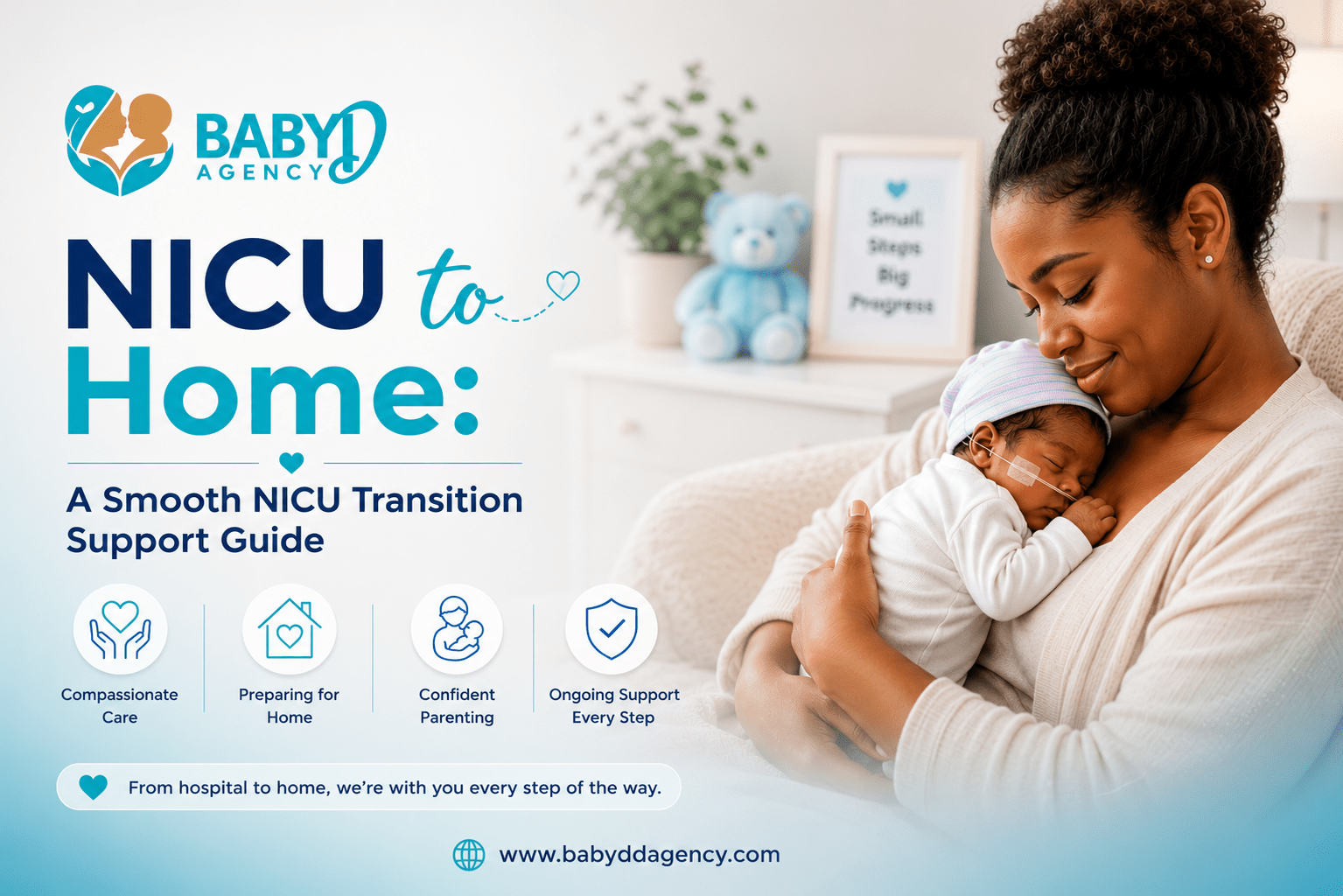
If your baby spent time in the neonatal intensive care unit, you already know the NICU comes with its own rhythm, monitors, schedules, nurses who become like family. Bringing baby home from the NICU means stepping out of that structured environment into one where you’re suddenly the only line of defense. That shift is exciting and, for most families, genuinely disorienting. The good news is that with the right NICU transition support, the move from hospital to home doesn’t have to feel like free fall.
- Why NICU Transition Support Matters More Than People Expect
NICU admissions are more common than many parents realize. According to a CDC data brief from the National Center for Health Statistics, the percentage of U.S. infants admitted to a NICU rose from 8.7% in 2016 to 9.8% in 2023, meaning nearly one in ten babies spends time there. That’s a lot of families navigating this exact transition, and yet very little standard preparation exists for the jump from round-the-clock clinical monitoring to home care.
Unlike a straightforward hospital discharge after a healthy full-term birth, bringing baby home from the NICU often comes with added instructions: specialized feeding plans, medication schedules, follow-up appointments with specialists, and sometimes equipment like monitors or oxygen support. Having a clear plan for that first week at home makes an enormous difference in how manageable it feels.
- Before Discharge: What NICU Transition Support Should Cover
Most NICUs have a discharge planning process, but it helps to actively engage with it rather than wait for information to come to you. Before you leave, make sure you have clarity on:
- Feeding plan and schedule, including any special formula, fortifiers, or feeding equipment
- Medication instructions, written down, with dosing times and what to do if a dose is missed
- Follow-up appointments, including any specialists (cardiology, ophthalmology, or early intervention services) your baby’s care team has flagged
- Warning signs that require a call to the doctor or a return to the hospital
- Car seat testing, which many NICUs require before discharge for babies born preterm
Asking questions before you leave the hospital, even ones that feel repetitive, is far easier than trying to remember everything once you’re home and exhausted.
- The First Week Home: Managing the Emotional Shift
Many NICU parents describe a strange mix of relief and anxiety once they’re finally home. The constant monitoring you relied on in the NICU is gone, and it’s common to feel like you’re “waiting for something to go wrong” even when your baby is stable. This is a normal response to an intense experience, not a sign that something is actually wrong.
A few things help during this adjustment:
- Recreate structure where you can. If your baby had a consistent feeding and care schedule in the NICU, keeping a similar rhythm at home provides a sense of continuity for both baby and parents.
- Limit visitors initially. A baby coming home after a NICU stay, especially a premature infant, often has a more vulnerable immune system, so it’s reasonable to ask visitors to wait, sanitize, or stay away if they’re feeling unwell.
- Keep a simple log. Tracking feeds, diapers, and any symptoms in the first weeks makes pediatrician visits faster and catches patterns you might otherwise miss.
How Professional NICU Transition Support Helps
This is exactly the gap a Transition Specialist trained in NICU graduate care is built to fill. Rather than parents trying to become instant experts in specialized feeding schedules, medication timing, and monitoring while also recovering from birth themselves, a specialist experienced with NICU transitions can step in and handle the details with confidence.
That support typically includes help with:
- Managing feeding schedules and any specialized techniques your baby’s care team recommended
- Coordinating around follow-up appointments and therapies
- Overnight care so parents can sleep, which matters enormously after weeks of hospital visits layered on top of postpartum recovery
- Simply being a calm, experienced presence during a period that can otherwise feel isolating
Building Your Long-Term Support Plan
The transition from NICU to home isn’t a single event, it often unfolds over weeks or months, especially for babies who need ongoing follow-up care or early intervention services. Building a support plan that extends past the first week, whether that’s a family member on rotation, a Postpartum Transition Doula, or a certified Transition Specialist, helps prevent the burnout that can hit hard once the initial adrenaline of “we’re finally home” wears off.
- Conclusion
Bringing baby home from the NICU is a major milestone, and it’s normal for it to feel like both a relief and a challenge at the same time. With a clear discharge plan, realistic expectations for the emotional adjustment, and the right NICU transition support in place, families can move through this stage with far more confidence and far less guesswork.
- FAQ
Q: How common is it for a baby to be admitted to the NICU?
A: NICU admissions have been rising in recent years. CDC data shows nearly one in ten U.S. infants was admitted to a NICU in 2023, up from about one in eleven in 2016.
Q: What should I ask before my baby is discharged from the NICU?
A: Confirm the feeding plan, medication schedule, follow-up appointments, warning signs to watch for, and whether your baby needs to pass a car seat test before discharge.
Q: Is it normal to feel anxious after bringing baby home from the NICU?
A: Yes. Many parents feel a mix of relief and heightened worry once the constant hospital monitoring is gone. This is a common response and tends to ease as you settle into a routine at home.
Q: What does NICU transition support from a Transition Specialist include?
A: It typically covers help with specialized feeding, medication timing, coordinating follow-up care, and overnight support so parents can rest during an especially demanding stretch.
Q: How long does the adjustment period after a NICU stay usually last?
A: It varies widely depending on your baby’s needs, but many families find the first two to four weeks at home are the most intense, with things gradually feeling more manageable as routines settle in.